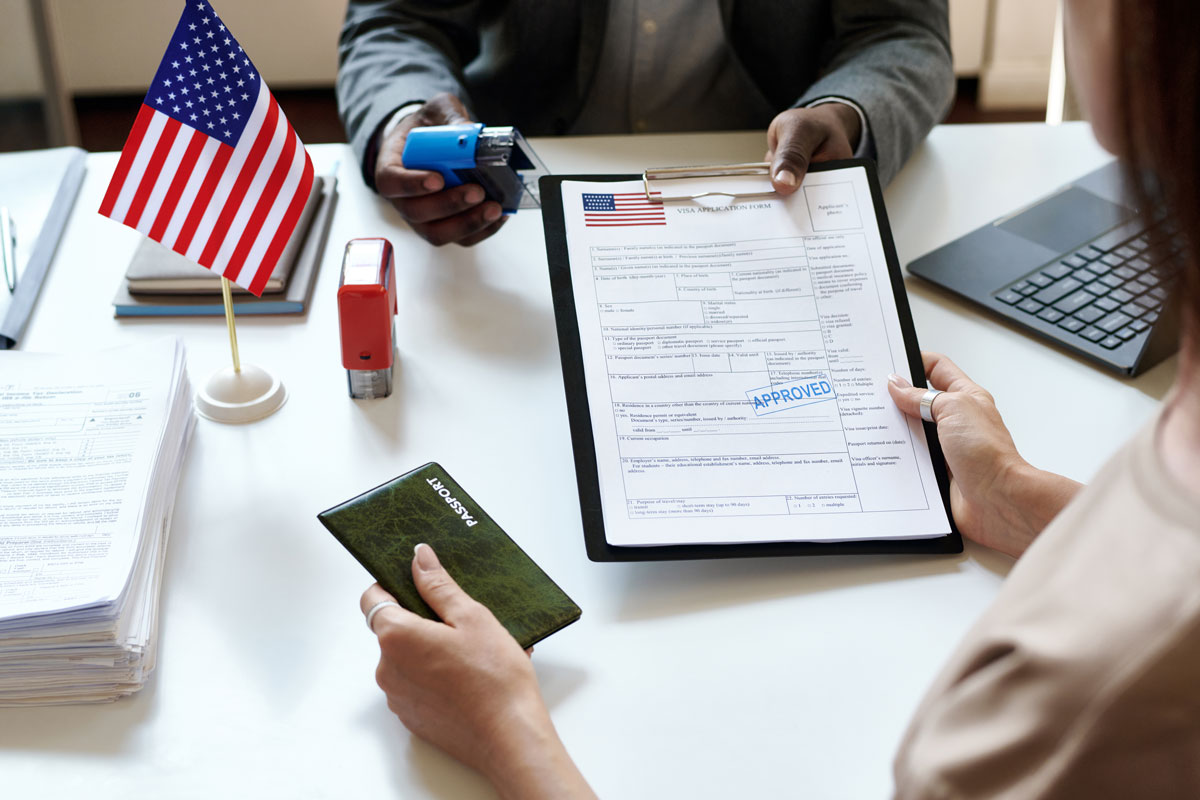
Having a loved one detained by ICE can be highly stressful and overwhelming. Here are some steps you can take to help your loved one get released:
Step 1: Check the ICE Locator
The first thing you want to do is find out where your loved one is detained. To do that, you will need to go to locator.ice.gov and enter your loved one’s information. You will need the following information:
- Your loved one’s Alien number; and
- Your loved one’s country of birth.
The A number is a 9-digit number that you can find in most Department of Homeland Security paperwork. The A number can also be found in most Immigration Court correspondence. If the number only has 8 digits, you will need to add a zero in front of the number.
If you do not have or you do not know your loved one’s A number, you can try searching in the ICE locator by entering your loved one’s full name, country of birth, and date of birth. You may need to try different forms and different spellings of your loved one’s name. If your loved one has two last names, try both separately and with a hyphen.
Step 2. Gather information about your loved one’s immigration history
After you have found where your loved one is detained, it is advisable to collect information about your loved one’s immigration history. In doing so, your loved one’s A number may be helpful. For example, you can visit the EOIR Automated Case Information System (www.acis.eoir.justice.gov) and enter your loved one’s A number and nationality to find out if your loved one has an upcoming hearing at the immigration court, or if she or he has a prior removal order. Alternatively, case information may be found by calling 1-800-898-7180 / 304-625-2050 (TDD 800-828-1120).
In addition to checking the EOIR Automated Case Information, it is recommended that you ask your loved one if she or he ever applied for an immigration benefit and if she or he retained copies of receipt notices or any application submitted to immigration. If your loved one already has an immigration attorney, it is recommended that your loved one give permission to another family member or trusted friend to speak to the attorney in case the loved one is detained.
Step 3. Find an Immigration Attorney
The immigration process while in detention can be quick and complex. That is why we recommend finding a qualified immigration attorney who can represent your loved one in his immigration case. Before consulting with an immigration attorney, it is recommended that you know where your loved one is detained and some of his or her immigration history. If your loved one is already represented by an immigration attorney, then it is recommended to reach out to their current counsel first.
If your loved one has a prior deportation or removal order (including an expedited removal order), or entered the United States through the visa waiver program, you should contact an immigration attorney immediately, as your loved one could face quick deportation.
Step 4. If your loved one is detained in Minnesota, he or she might need to file for habeas corpus
If your loved one entered the United States without inspection and is currently detained in Minnesota, she or he will probably need to file a habeas corpus petition in federal court to challenge the detention.
This is the case because on March 25, 2026, the U.S. Court of Appeals for the Eighth Circuit, which has jurisdiction over Minnesota, issued a decision in a case called “Avila v. Bondi,” stating that everyone who entered the United States without inspection, regardless of when the person entered, is subject to mandatory detention. Mandatory detention means that the person is not eligible to pay a bond to be released and must remain in detention until the conclusion of the removal proceedings.
Today, the primary way to be released from ICE custody in Minnesota is by filing a habeas corpus petition first. Please note that this only applies to those who entered without inspection; if the person entered legally using a visa, the habeas corpus petition might not be necessary.
To increase the chance of winning the habeas corpus petition, it is recommended to hire an attorney with experience in this type of case. The attorney needs to have a license to practice law before the federal court in the state where the person is detained. If your loved one is detained in Minnesota, you need to find an attorney who has been admitted to practice before the U.S. District Court for the District of Minnesota.
Remember that if your loved one is NOT detained in Minnesota, he or she might not be subject to mandatory detention and might be eligible for a bond hearing without filing for an habeas corpus petition first.
Step 5. Prepare for a Bond Hearing
If your loved one’s habeas corpus petition is successful, he or she might be released, or the federal judge might order the immigration judge to schedule a custody hearing within a short period of time. The federal judge who decides the habeas corpus petition is different from the immigration judge who decides the custody hearing.
During the custody hearing, an immigration judge will decide if your loved one should be released. If the immigration judge believes that your loved one is a danger to the community (because she or he has criminal records) or a flight risk (because she or he will not attend the court hearing), the judge will deny a bond and the person will remain in detention until the conclusion of their removal proceedings or until the person is removed. That means that your loved one will need to fight their immigration case, for example, by applying for asylum or cancellation of removal while in detention.
On the contrary, if the immigration judge believes that your loved one will attend the court hearings and is not dangerous, he or she will be ordered released under a bond of at least $1500.
Step 6. Posting a Bond
If the immigration judge orders release, the next step is posting a bond. To post the bond, your loved one will need an “obligor” who will post the bond by using the CeBONDS web-based system.
CeBONDS is available for users within the United States, and only U.S. citizens, lawful permanent residents, law firms, and non-profit organizations can use it. For more information about using CeBONDS, please visit https://www.ice.gov/detain/detention-management/bonds.
Should you hire an attorney to help your loved one be released?
Yes, you should hire an experienced immigration attorney who can help you decide if your loved one has any viable path to release or relief from removal. That could save you money, time, and give you the peace of mind you need in this difficult situation.
At Bienvenidos Law Firm, Inc., we handle detainee cases, removal defense cases, and habeas corpus petitions. We have over 25 years of experience in immigration cases, and our attorneys are admitted to practice before the U.S. District Court in Minnesota and Texas. Please call us at 763-951-2235 or email blf@bienvenidoslaw.com to schedule an appointment today!